
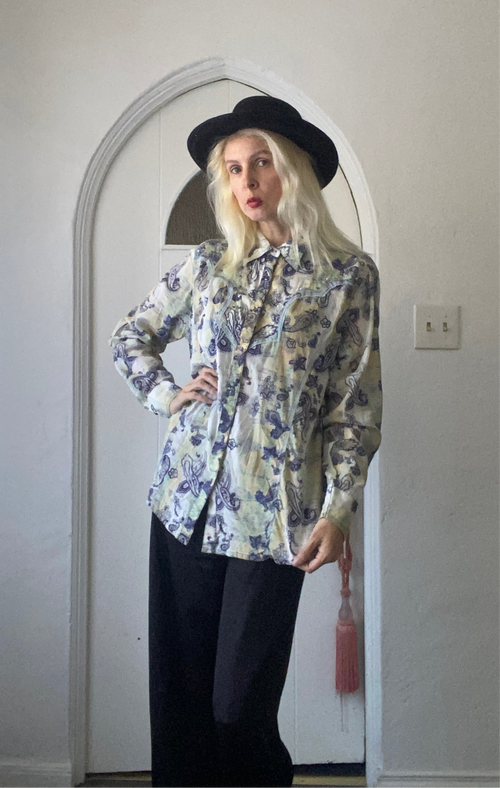
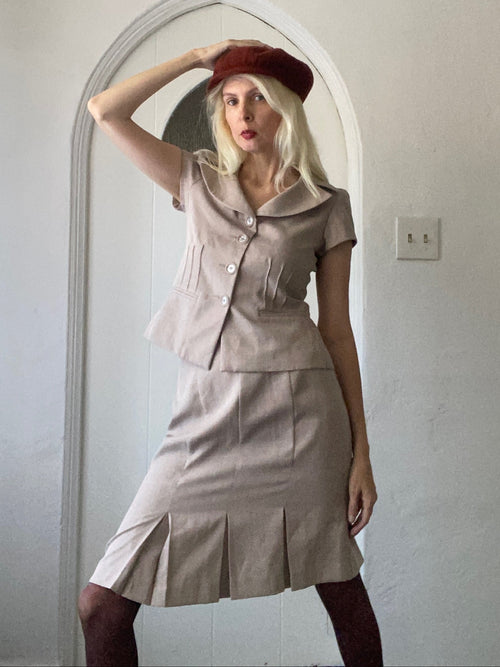

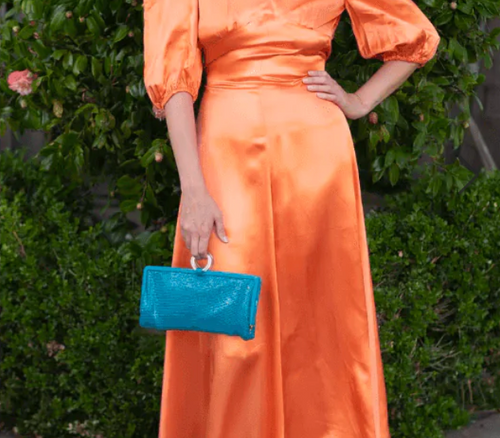

The 1960s rewrote the fashion rulebook in less than ten years. Shop the Look The decade opened with the structured tailoring and gloves of the late 50s and closed with mini skirts, psychedelic prints, and the first ripples of bohemian style. Few decades changed silhouettes so quickly — which is why 60s vintage is endlessly collectible.
If you're new to the era, the best way to understand it is to split it into two halves: the early-to-mid 60s of clean mod minimalism, and the late 60s of soft, romantic, and increasingly free-spirited dressing.
Early 60s: mod, modern, minimal
Think Audrey Hepburn, Jackie Kennedy, and the Paris ateliers of André Courrèges and Mary Quant. Dresses had simple geometry — shift cuts, sleeveless sheaths, A-lines, and trapeze silhouettes. Hemlines hovered at the knee, then rose. Fabrics were crisp: cotton piqué, gabardine, wool crepe, and bonded jersey.
Color was confident but contained — color-blocked panels, white, navy, mustard, and pillar-box red. Geometric prints, bold dots, and graphic florals played against clean cuts.
Mid-60s: the mini and the model
By 1965, the mini skirt was everywhere. Twiggy, Jean Shrimpton, and Edie Sedgwick became the era's visual shorthand. Shift dresses got shorter and bolder; vinyl, PVC, and metallic fabrics arrived; and the youthquake reshaped who fashion was designed for.
This is the period when bold prints, op-art black and white, and psychedelic swirls began their takeover.
Late 60s: the soft pivot
The decade ended with a complete tonal shift. Mini hems coexisted with maxis. Prints grew floral and dreamy. Empire waists, billowing sleeves, and prairie collars previewed everything that would define the 70s. The Summer of Love mainstreamed bohemian dress, and labels like Biba and Ossie Clark gave it shape.
This late-60s sweet spot is where vintage boho lovers find some of their favorite finds — pieces that bridge mod precision and 70s flow.
Fabrics, construction, and care
Common 60s fabrics include cotton, wool crepe, polyester (then a luxury fiber), rayon, jersey, and bonded knits. Construction was often impeccable: French seams, metal back zippers (Talon especially), lined bodices, and hand-finished hems.
Care them gently — hand wash or dry clean delicate pieces, store flat or padded on hangers, and keep them out of direct sun.
How to style 60s vintage today
The cleanest way to wear a 60s shift now is to lean into its geometry. Let the dress do the talking with low boots or pointed flats, simple gold jewelry, and a small structured bag. For a more boho mood, pull a soft late-60s prairie piece with low boots, layered necklaces, and a wide-brim hat.
60s pieces tend to run small by modern measurement, so always check the actual garment dimensions before buying.


