
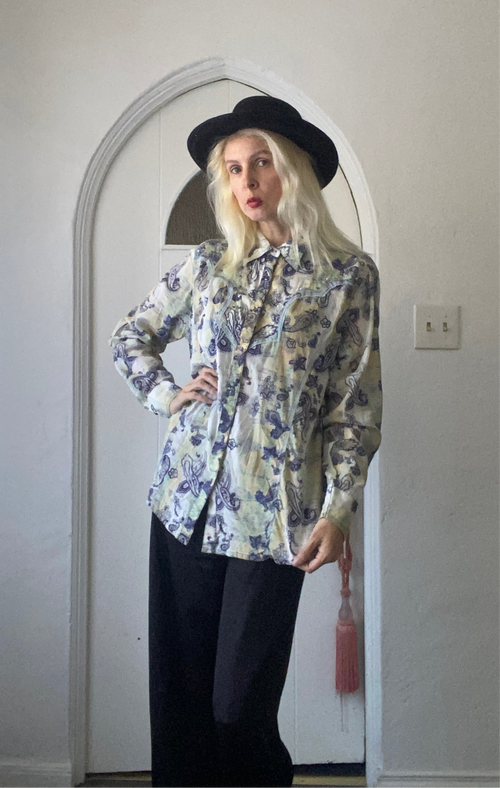
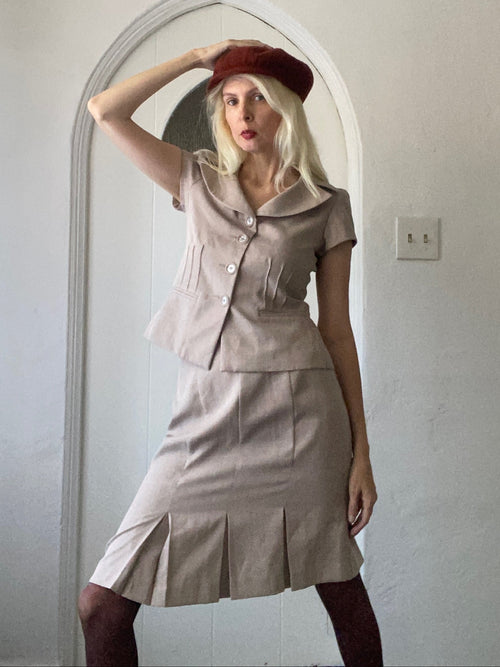

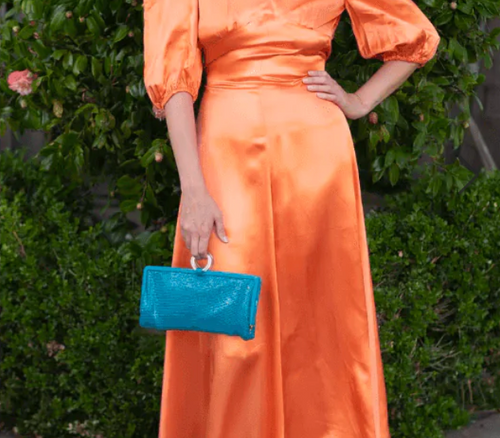

Fabric is what makes a boho piece feel like a boho piece. Shop the Look The cut and color get the credit, but it's the hand — the drape, the breath, the surface texture — that tells your eye and skin you're wearing something special. Here's a closer look at the most common boho fabrics and what each one brings to an outfit.
Understanding them also makes care decisions much easier.
Rayon: the boho workhorse
Rayon (and its close cousin viscose) is a regenerated cellulose fiber that drapes beautifully, breathes well, and takes dye gorgeously. It dominated 70s boho production for a reason — the fabric flows the way the silhouettes want to flow. Vintage rayon often has a slight stiffness when dry that softens with body heat.
Rayon shrinks aggressively in hot water and stretches when wet. Hand-wash cold, support the weight while wet, and lay flat to dry.
Cotton: structure with breath
Cotton gives boho its everyday wearability. Cotton voile, lawn, gauze, and eyelet all show up frequently. Heavier cotton appears in prairie dresses and structured smocked bodices. Cotton breathes, washes easily, and ages beautifully — vintage cotton from the 60s and 70s is often softer and denser than its modern equivalents.
Most cotton can take a cool machine wash on a delicate cycle, but eyelet and embroidered cottons prefer hand-wash.
Lace
Lace adds romance. Cotton lace, nylon lace, and rayon lace all appear in vintage boho. Cluny, Battenberg, and broderie anglaise are popular styles. Lace can be a trim, an insert, an overlay, or the whole garment.
Always hand-wash lace pieces, and store them flat or rolled in tissue paper — hanging stretches them out.
Crochet
Crochet vests, shawls, and dress overlays are signature 70s boho. Real vintage crochet is often hand-done, which is why it holds up so well structurally. Granny-square panels are common; so are open lace-stitch patterns.
Wash by hand in cool water, gently squeeze (never wring), and dry flat to preserve the shape.
Embroidery
Embroidered detail — floral, paisley, folk-motif, or geometric — appears on bodices, sleeves, hems, and yokes. Cotton-thread embroidery is most common; metallic and silk threads appear on dressier pieces.
Always wash embroidered garments inside out, in cool water, with a gentle detergent. Iron from the back side over a towel to preserve the relief of the stitching.
Gauze and voile
Lightweight cotton gauze and voile drape like clouds. They appear in tiered maxis, peasant blouses, and beach cover-ups. Gauze is especially common in 70s prairie dresses and modern boho revival pieces.
Care is gentle: hand or delicate machine wash, low heat or air dry, light iron if needed.
Identifying fabric in vintage pieces
Check the content label first. If there isn't one, a simple burn test (with permission from a small inseam clipping) reveals whether the fiber is natural or synthetic. Natural fibers smell like burning hair (wool/silk) or paper (cotton/rayon); synthetics melt into hard beads.
Most vintage shops will tell you the fabric content if asked — it's a fair question to ask.


