
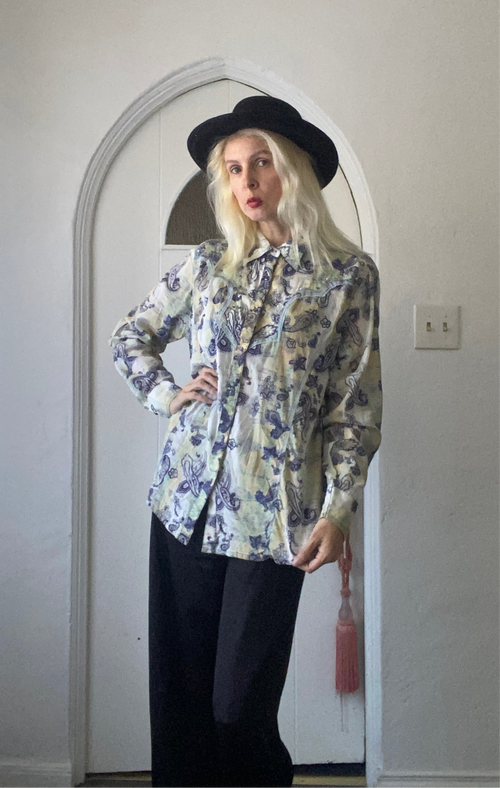
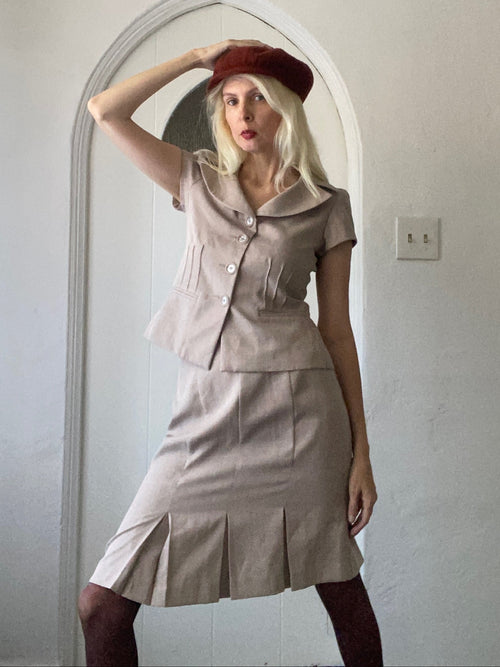


Three fabrics show up over and over in vintage clothing: rayon, cotton, and polyester. Shop the Look Each one has a distinctive feel, era association, and care profile. Knowing which one you're holding helps you wear it well, wash it correctly, and identify the decade it came from.
Here's a side-by-side guide.
Rayon: drape, breath, vintage romance
Rayon (and viscose, which is functionally the same) is made from regenerated cellulose. It drapes beautifully, breathes well, and takes color brilliantly — which is why 70s designers loved it. Vintage rayon has a slight dry stiffness when cool that softens as it warms against the body.
Recognize it by feel: cool to the touch, smooth but not slippery, and slightly heavy for its thickness.
Rayon care
Rayon is the most temperamental of the three. It loses up to 50% of its strength when wet, shrinks aggressively in hot water, and can stretch under its own weight when damp. Always hand-wash in cool water, support the fabric while wet, and lay flat to dry. Iron on a low setting from the inside.
Skip the dryer entirely. Heat is rayon's enemy.
Cotton: durability and breath
Cotton is the most durable and the easiest to care for. It breathes beautifully, washes easily, and ages with grace — vintage cotton often softens with each wear without losing structure. The fiber appears in everything from prairie dresses to denim to embroidered tops.
Recognize cotton by feel: warm to the touch (warmer than rayon), absorbent, and slightly textured.
Cotton care
Most cotton tolerates cool to warm machine washing on a delicate cycle. Tumble-dry low or air-dry. Iron on a medium-to-high setting. Bleach should be avoided — it weakens fibers and yellows over time.
Embroidered, eyelet, and lace cottons prefer hand-washing to protect the surface detail.
Polyester: era markers and modern feel
Polyester showed up in vintage clothing as early as the late 1950s but exploded in the 1970s with heavy printed knits, and again in the early 2000s with stretch blends. Vintage polyester (especially 70s polyester) has a distinctive heavier hand than modern polyester, which tends toward thinner and slicker.
Recognize polyester by feel: slick, lightweight, doesn't crease much, and has a slight synthetic sheen.
Polyester care
Polyester is the most forgiving in the laundry. Machine wash cool to warm, tumble dry low, iron only on very low if needed. The fabric resists shrinkage and wrinkle, which is part of why it dominated the 70s.
Avoid high heat — polyester can melt or develop a permanent sheen.
Blends and how to read them
Many vintage pieces are blends — cotton-polyester, rayon-polyester, cotton-rayon. The blend's behavior follows the dominant fiber. A piece that's 60% cotton and 40% polyester behaves mostly like cotton; the reverse behaves mostly like polyester.
Always check the content label and care accordingly.
Which fabric for which use
If you want drape and romance, look for rayon. If you want durability and easy care, look for cotton. If you want wrinkle resistance and lower-maintenance wear, look for polyester or a blend. Most vintage boho leans rayon and cotton, but polyester appears more often than you'd expect — especially in printed 70s pieces.


